logo

Jolly Phonics Teacher's Guide

Blending Sounds to Read

Building confident and fluent readers
What is Blending?

Blending

Lifestyle Classroom Pics Edited 63

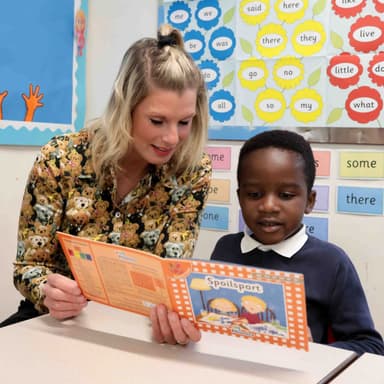
Blending is the skill of combining individual sounds to read a word. It is introduced from the very beginning and practised daily with decodable words. With support and repetition, all pupils can master this vital reading skill.

    1
    Start Blending Early in Every Phonics Lesson
    • Begin with auditory blending and move onto blending regular words as soon as enough letter sounds have been taught.
    • Model with the “I say it, we say it, you say it” routine.
    • For success the pupils need to be tuned in to hear the word after saying the sounds and blending them together.
    2
    Techniques for Developing Blending Fluency
    • Use word-blending boxes or Little Words Books or Read & See Books.
    • Practice using games, such as word and picture matching.
    • Practise consonant-vowel pairs (e.g., pa, pe, pi, cri, sta).
    3
    Encouraging Silent Blending
    • Once you are sure the children can blend words for themselves, encourage them to blend words silently in their head.
    4
    Progressing with More Complex Words
    • Use various length words and not just cvc as soon as possible.
    • Include words with alternative spellings, once they have been taught, in Steps 2 and 3.
    • Use the Jolly Phonics Word Bank Book for suitable words, phrases and sentences.
    5
    Fluency & Comprehension
    • Fluency is developed through practice, which leads to improved comprehension and reading confidence.
    • In the beginning a pupil's comprehension usually depends on their experiences before starting school, as well as their mother tongue, general knowledge and intelligence. It develops through listening, speaking and reading many books.
    • Nearly always if a pupil is able to understand something that is spoken to them then they will understand it when they read it.

    Tips for Success

    • When pupils read accurately but very slowly, this problem is usually a sign that not enough word blending has been practised.

    • It may also indicate that pupils have been asked to read books before being confident enough at blending individual words and phrases.

    • It is recommended in Jolly Phonics that pupils do not start using decodable readers until the Groups 1–7 letter sounds have been taught.

    • Also, problems will occur, particularly with strugglers, if non-decodable readers are used. To learn more about decodable readers, check out our section on decodable readers under the resources tab.

    Need extra support for struggling pupils?

    Resources for Blending

    Read and See

    Jolly Phonics Read & See Books

    Fourteen starter books that build blending skills step by step. Children sound out and blend one word per page before checking with a picture, making these ideal first readers for home or school phonics practice.

    Blends Wheel

    Jolly Phonics Blends Wheels

    Double-sided wheels for exploring initial blends on one side and final blends on the other. Children spin and combine sounds to build words, giving engaging practice in blending, segmenting and early reading fluency.

    Phonics Cards Blue

    Jolly Phonics Cards

    Four flashcard sets for daily teaching, revision and games. Covering letter sounds, regular and alternative word blending (with sound dots for support) and tricky words in teaching order. A practical resource for reinforcing phonics skills at every stage.

    Ready to strengthen blending skills?SHOP ALL
    Continue your phonics learning journey: