



About the School
Henley in Arden Church of England Primary School in Warwickshire is a small primary school with four mixed-age classes and has been using Jolly Phonics since 2000. In this case study, Elaine Field, the school’s Reading and Phonics Lead, shares her experience of using the programme to support children’s reading and phonics development.
Helping Children Remember Their Letter Sounds
When the school first introduced Jolly Phonics in 2000, its teachers were looking for a more effective way to help young children learn and remember letter sounds.
Having previously used another scheme, Elaine recognised that pupils needed something more memorable to support their early literacy development.
“The children couldn't remember the letters. There was just not enough to hook onto.”
After researching alternative approaches, she discovered Jolly Phonics and was immediately drawn to its multisensory teaching methods, particularly the actions associated with each letter sound.
“I really liked the actions, because you could perform the action and the children would remember the sound.”
That decision marked the beginning of a relationship with Jolly Phonics that has now lasted 26 years.
“I like the fact that it is a robust programme. And I think the fact that we've used it for so long and continued to have good results with it is a testament to the programme.”
Reading and Phonics Lead, Henley in Arden Church of England Primary School
Why Jolly Phonics? A Programme That Stands the Test of Time
Over the years, the school has seen numerous phonics programmes emerge, but it has remained committed to Jolly Phonics.
For Elaine, the programme's structured approach, memorable actions and practical classroom resources have continued to support effective teaching.
Having seen the results first-hand, Elaine felt there was little reason to change an approach that was working for the school.
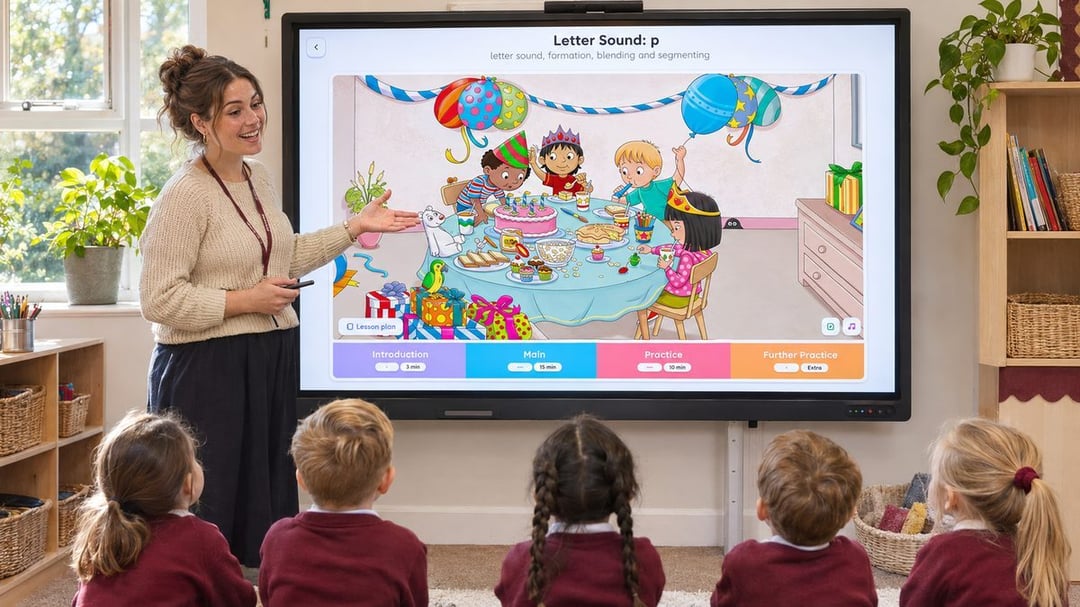
Today, Jolly Phonics remains central to the school's early literacy teaching, with Jolly Classroom providing digital resources to support lesson delivery.
Bringing Phonics to Life in the Classroom
The school has four mixed-age classes, covering Nursery and Reception through to Years 5 and 6, alongside a specialist resource provision for pupils with social and emotional needs.
Jolly Phonics is primarily used in Reception and Year 1, with additional support provided to older pupils who need further phonics practice.
In Reception, the teacher follows the Jolly Classroom lessons closely, using the interactive resources to introduce letter sounds and develop early reading skills.
In Year 1, the approach combines digital lessons with practical reinforcement activities.
For example, pupils might spend one lesson exploring a sound through Jolly Classroom before revisiting it the following day through word-building and writing activities on individual whiteboards.
This gives children additional opportunities to apply their learning in both reading and writing.
The school follows the three steps of Jolly Phonics across Reception and Year 1. Reception pupils typically complete Step 1 and begin Step 2, while Year 1 starts with revision before progressing through the remaining content.
Making Learning Interactive with Jolly Classroom
The introduction of Jolly Classroom has been a particularly welcome development.
Previously, teachers relied on physical flashcards and other resources throughout lessons. Now, the digital platform brings those materials together, making it easier to deliver structured, engaging sessions.
Pupils particularly enjoy opportunities to interact with the smartboard, build words and participate in songs and stories.
Elaine has also noticed that older pupils remain interested in the familiar songs and stories, even when they are working on other activities.
For teachers, having resources readily available on screen has made lesson delivery more straightforward, reducing the need to switch between different physical materials.
Alongside Jolly Classroom, the school continues to use printable Jolly Phonics resources, particularly the Step 2 sentence-writing activities, as part of weekly writing challenges.


